



The difference between HLTAID011 and HLTAID009 is how much they cover. HLTAID011 Provide First Aid includes CPR plus first aid for injuries and illnesses such as bleeding, fractures, asthma and anaphylaxis, and it's the standard unit for workplace first aiders. HLTAID009 Provide cardiopulmonary resuscitation covers CPR and defibrillator (AED) use only. Take it as a yearly CPR refresher, or when CPR is all your role asks for.
What's the difference between HLTAID011 and HLTAID009?
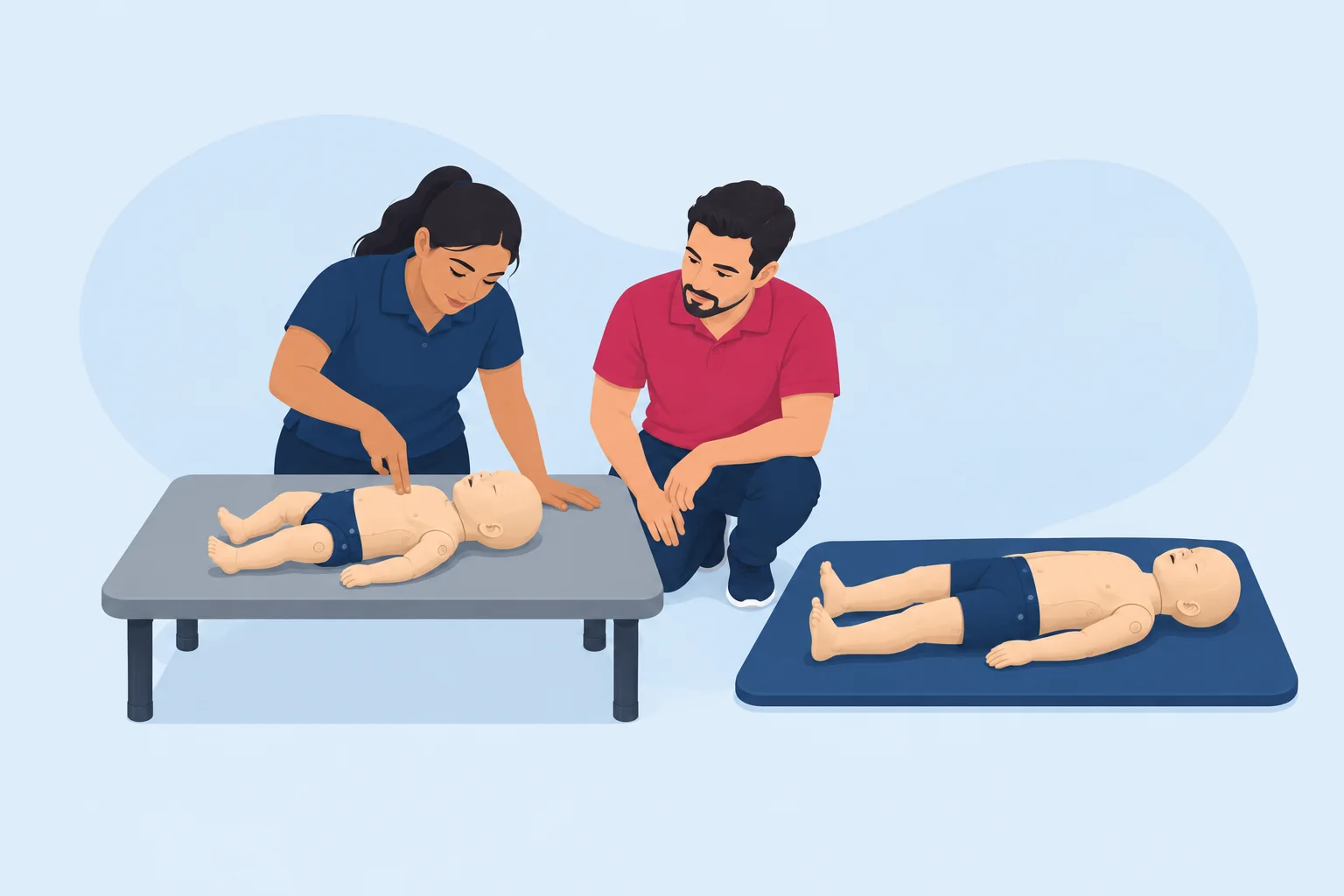
HLTAID011 covers the same CPR skills as HLTAID009, then adds the rest of first aid. On training.gov.au, both units set the same CPR assessment: at least 2 minutes of uninterrupted CPR on an adult manikin on the floor, at least 2 minutes on an infant manikin, and following an AED's prompts to deliver a shock.
Alongside CPR and AED use, HLTAID009 covers the recovery position for someone who's unconscious but breathing, calling Triple Zero (000) and handing over to emergency services.
HLTAID011 adds hands-on practice in managing:
- anaphylaxis and asthma
- bleeding, minor wounds and nosebleeds
- choking
- fractures, dislocations, sprains and strains
- bites that need a pressure immobilisation bandage, such as snake bite
- shock
You also learn to recognise and manage conditions such as burns, seizures, stroke and diabetic emergencies, and you complete a written incident report.
Which unit does a workplace first aider need?
Workplace first aiders need HLTAID011. Safe Work Australia's model Code of Practice says first aiders should, as a minimum, hold a Statement of Attainment for the nationally endorsed unit Provide First Aid, or a course with equivalent skills.
That code is written for the states and territories under the model WHS laws. Victoria runs under its own OHS Act 2004, and WorkSafe Victoria's compliance code sets the same minimum for first aid officers. In both cases HLTAID009 alone isn't enough, and remote or higher-risk workplaces may need extra training on top.
When is HLTAID009 enough on its own?
HLTAID009 is enough when your HLTAID011 is less than three years old and only your CPR is due, or when CPR is all your employer or registration body asks for. It also works as a standalone course if you want CPR and AED skills without the full certificate.
Some registration bodies ask for both, on separate cycles. AUSactive, which registers fitness professionals, recognises HLTAID011 for three years and HLTAID009 for one year, and both must be current for registration to stay valid.
How often do you need to renew first aid and CPR?
The usual pattern is CPR every 12 months and first aid every three years. Safe Work Australia's model Code and WorkSafe Victoria's compliance code both recommend those intervals, and employers and industry bodies often make them a requirement. Your Statement of Attainment itself doesn't expire.
CPR skills fade fast. ANZCOR's training guideline notes that resuscitation skills and knowledge deteriorate 1 to 6 months after a course without practice.
For a workplace first aider, a three-year cycle looks like this:
- Start with HLTAID011. It includes the same CPR training and assessment as HLTAID009.
- At 12 months, do HLTAID009.
- At 24 months, do HLTAID009 again.
- At 36 months, redo HLTAID011 and the cycle repeats.
For more detail, read our guide to when first aid and CPR need renewing.
How do you check which unit your job needs?
Ask whoever sets the requirement: your employer, registration body or industry regulator. Both units' descriptions on training.gov.au say refresher requirements should come from the relevant WHS regulator. If you work in education and care, such as childcare, check with your regulator before booking, because that sector may need a different unit.
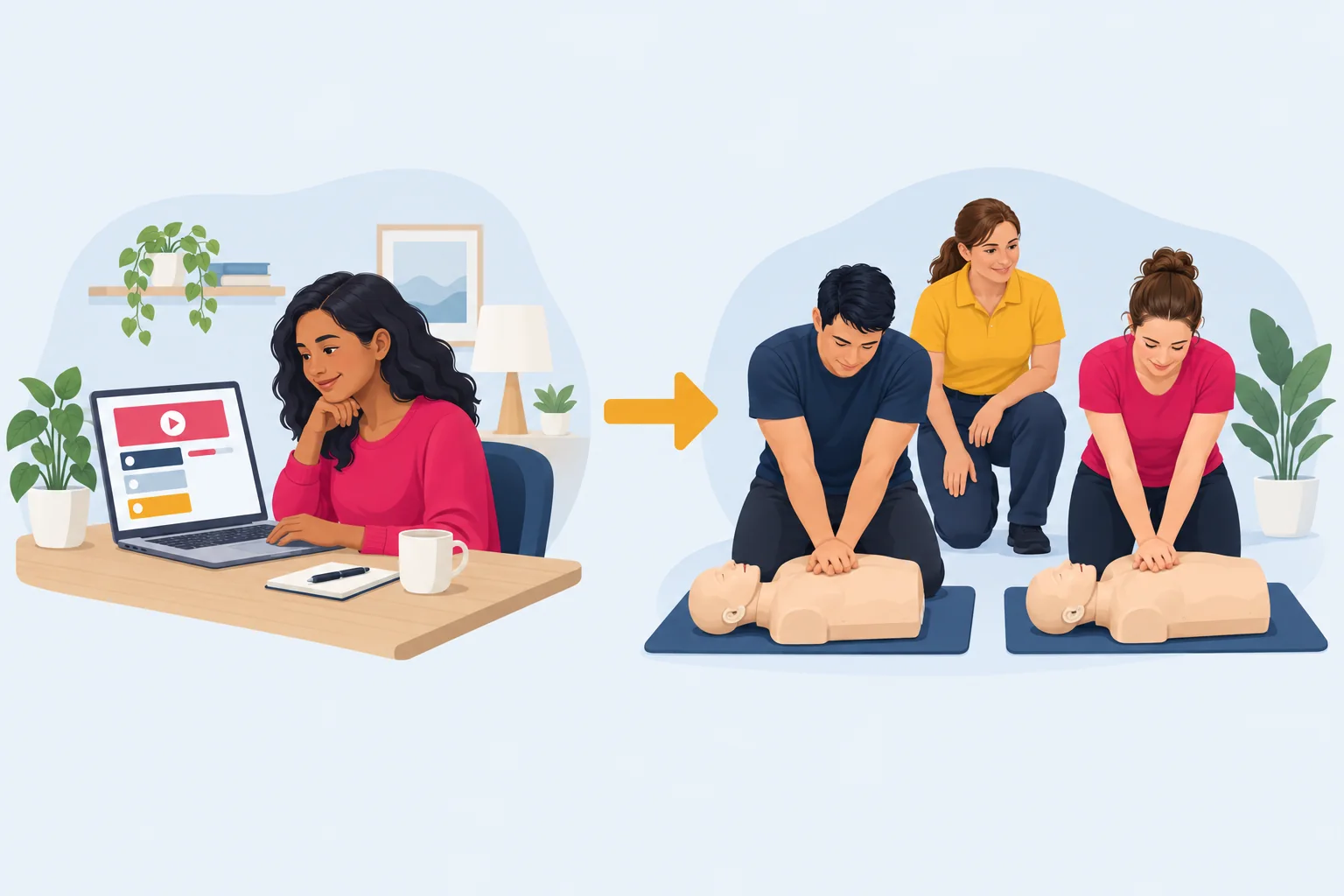
If you need the full certificate, start with our HLTAID011 Provide First Aid course: online theory, then a practical session of about 3 hours. If your first aid is current and only CPR is due, the HLTAID009 Provide CPR course is a shorter online module and a practical of about 2 hours. Or send us an enquiry and we'll tell you which certificate your role calls for.
Sources
- HLTAID011 Provide First Aid – training.gov.au
- HLTAID009 Provide cardiopulmonary resuscitation – training.gov.au
- Model Code of Practice: First aid in the workplace – Safe Work Australia
- Compliance code: First aid in the workplace – WorkSafe Victoria
- Guideline 10.1: Basic Life Support (BLS) Training – ANZCOR
- Professional Registration FAQ – AUSactive

.svg)


