



First aid and CPR certificates are a common requirement for healthcare jobs, student placements and volunteer roles, but they won't get you into echocardiography on their own. In Australia, healthcare career pathways into cardiac sonography usually involve a science or health degree, then a postgraduate course accredited by the Australian Sonographer Accreditation Registry (ASAR) done alongside a clinical training position, and finally ASAR accreditation.
Why do healthcare jobs ask for a first aid certificate?
Mostly because employers have to provide first aid, and a nationally recognised Statement of Attainment is the standard evidence that someone can give it. Universities and volunteer groups often ask for the same certificates before they send you out to patients or players.
In Victoria, employers' first aid duties come from the Occupational Health and Safety Act 2004. WorkSafe Victoria's compliance code says first aid officers should, at a minimum, hold a Statement of Attainment for Provide First Aid (HLTAID011) from a registered training organisation. Outside Victoria, Safe Work Australia's model Code of Practice sets the same minimum, and your state or territory regulator can tell you which version applies.
Universities build it into placement checks. At the University of Melbourne, multiple health disciplines require HLTAID011 before placement, and some also want HLTAID009 Provide cardiopulmonary resuscitation repeated every year. The faculty says it can take up to three weeks to book and complete the training, so it's worth sorting early.
Community and volunteer roles can ask too. In most major sporting codes, working as a sports trainer means holding Sports Medicine Australia accreditation, and its Level 1 Sports Trainer course requires HLTAID011 completed within the past three years and HLTAID009 within the past 12 months.
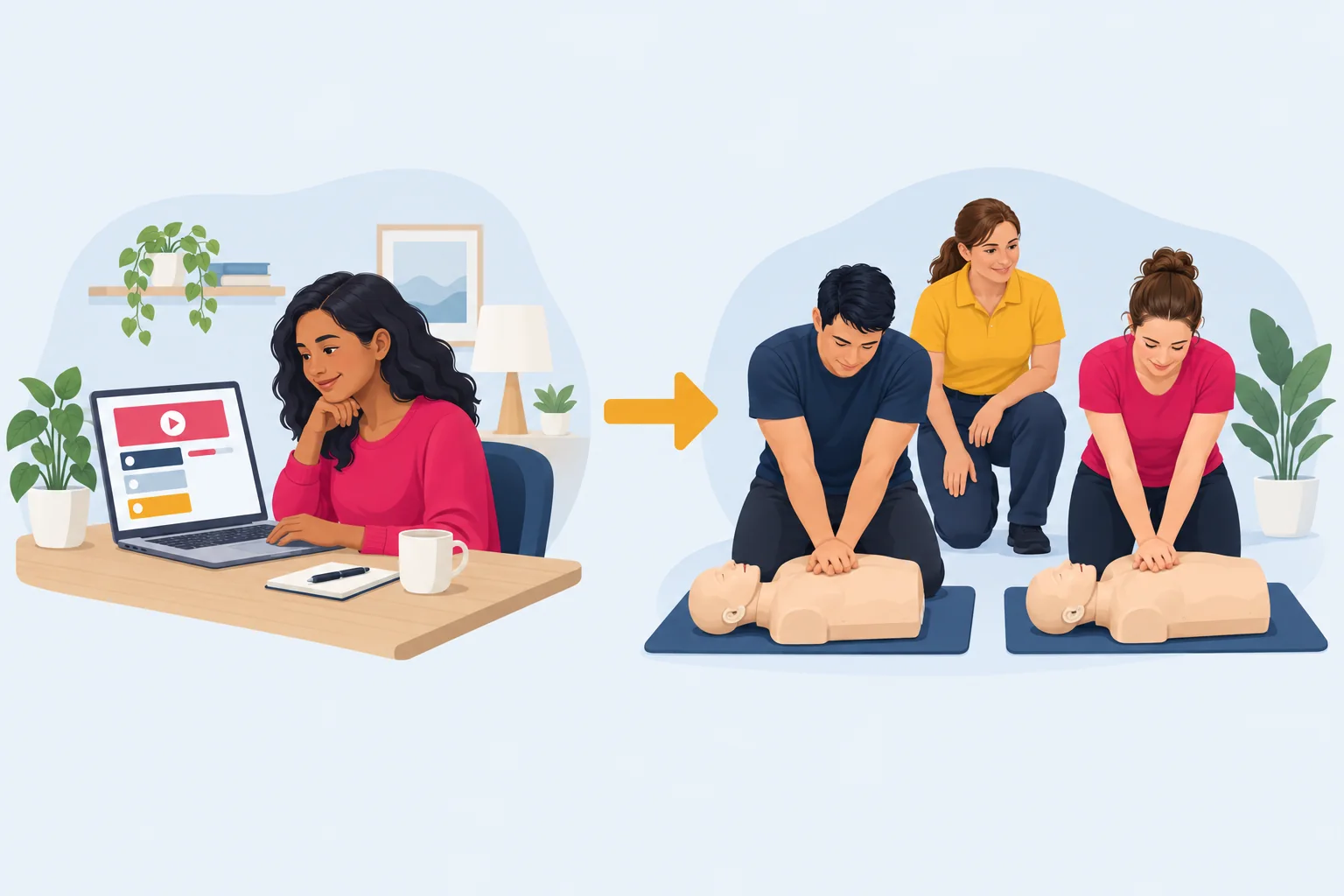
The Statement of Attainment itself doesn't expire. Both workplace codes recommend refreshing CPR every year and first aid every three years, and employers, placement teams and clubs often make those intervals a requirement. ANZCOR's training guideline gives the practical reason: CPR skills can fade within weeks to months of a course.
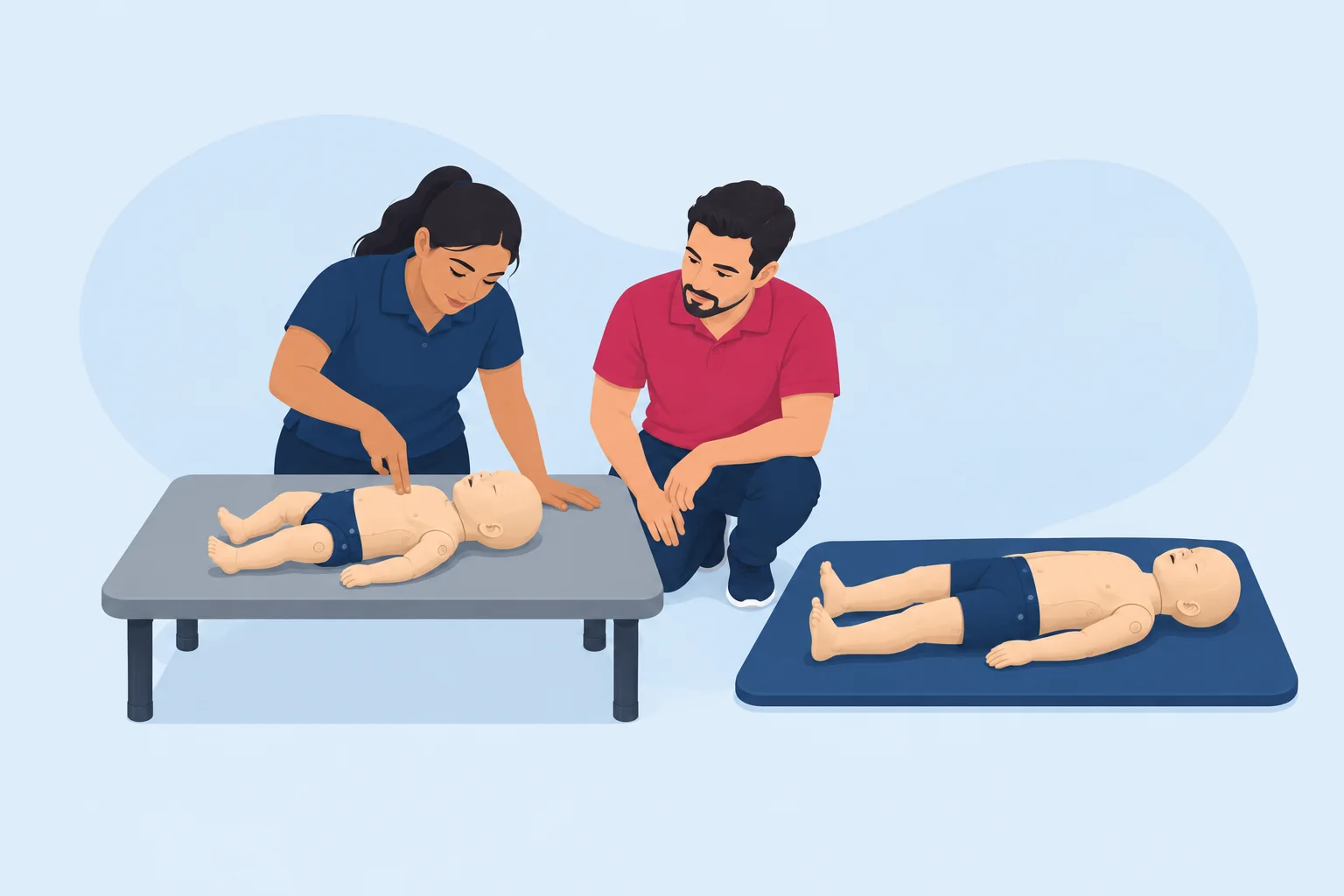
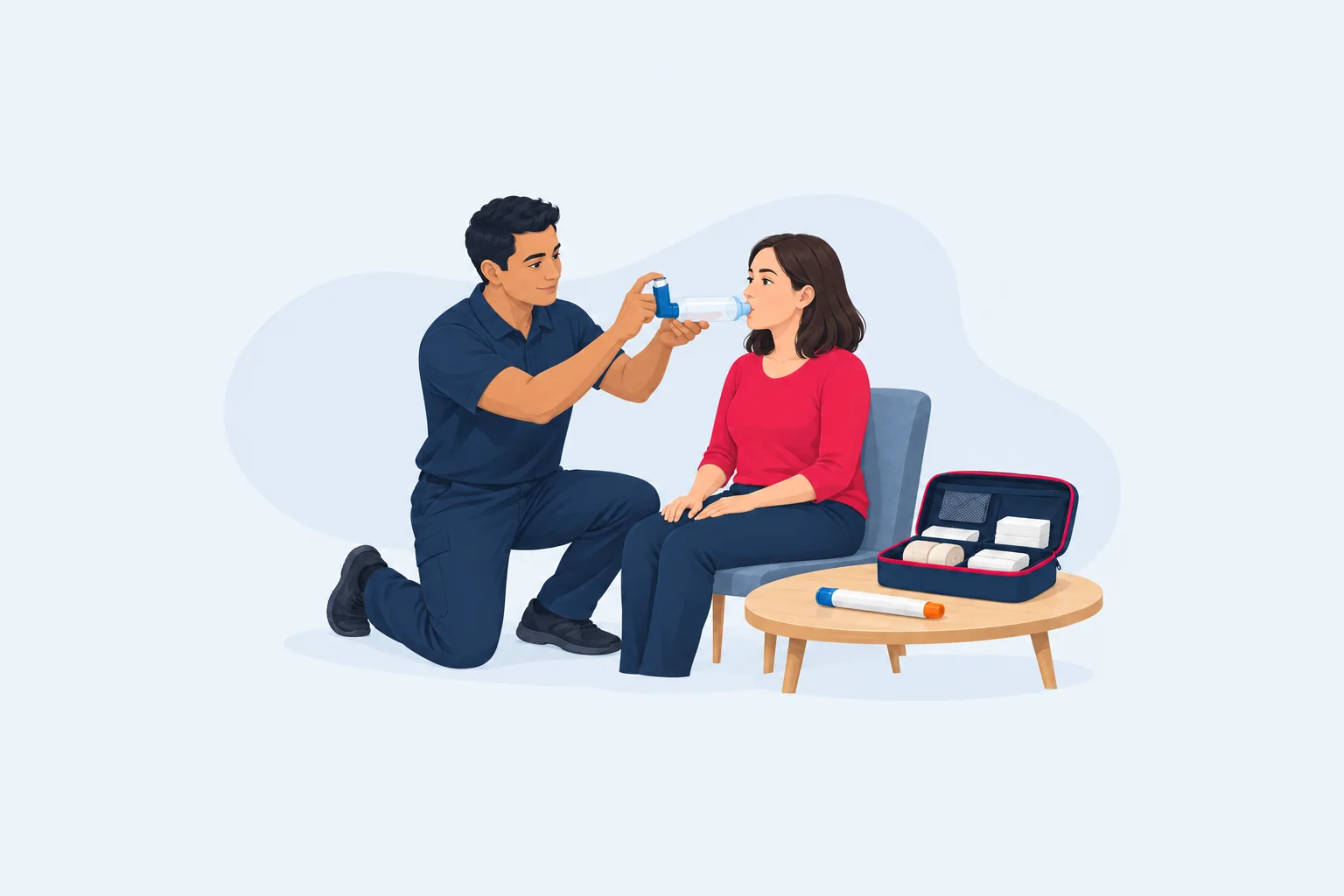
HLTAID011 covers calling Triple Zero (000), CPR, using an AED, and first aid for conditions such as chest pain, asthma and anaphylaxis. If you're heading towards cardiology, that's a practical first look at cardiac emergencies.
Which healthcare career pathways lead into cardiac imaging?
Usually a degree comes first, and the way in is often a job or contacts inside imaging or cardiology. Accredited sonography courses are mostly postgraduate, and the Australasian Sonographers Association (ASA) says many students secure their clinical training placement through their existing workplace.
Each starting point covers part of that:
- Nurses and allied health professionals usually hold a suitable health degree and already work alongside clinicians.
- Cardiac technicians record the heart's electrical activity for cardiologists, so they already work in the clinics where echocardiograms are done.
- People in entry-level health jobs, such as reception in an imaging practice, gain industry contacts rather than a clinical qualification, and still need a degree for postgraduate entry.
- Science graduates and career changers have the degree but often not the contacts, which makes the placement search harder.
The ASA says getting a placement can be competitive. ASAR, which doesn't run courses or arrange placements, suggests contacting the HR teams at as many imaging practices as you can and talking to anyone you know in the industry.
What's the realistic route to becoming a cardiac sonographer?
You need an ASAR-accredited qualification, usually a graduate diploma or master's in cardiac sonography, completed while you work in a clinical training position, and then accreditation with ASAR. The steps:
- Finish a degree in health science or a related field. One exception is CQUniversity's combined Bachelor of Echocardiography and Cardiac Physiology/Graduate Diploma of Echocardiography, which starts at undergraduate level and helps arrange placements.
- Secure a clinical training position. Most universities want one in place before you start, and you arrange it yourself.
- Enrol in an ASAR-accredited cardiac program and register with ASAR as an Accredited Student Sonographer once your clinical placement starts.
- Complete the clinical training. The ASA recommends at least three days a week over two years, about 2,200 hours.
- Upgrade to Accredited Medical Sonographer once you've finished the course. Sonographers doing Medicare-funded scans for a medical practitioner must be on the register ASAR keeps on Medicare's behalf.
Our guide to becoming a cardiac sonographer in Australia covers each step in more detail.
Where does our echocardiography career pathway fit?
It's hands-on, in-depth training for graduates. You take it before the university route and, if you're selected for Part 3, alongside it, and it prepares you for the day-to-day work of a cardiac sonographer. Students sometimes come to us knowing the theory well but unable to apply it with a probe in their hand, and the pathway is where they get that practice.
The clinical parts take place mainly at Heartscope, the group of cardiology clinics run by our parent company, Scope Healthcare Limited. There are four stages, all linked from our ultrasound courses page:
- Basic Echocardiography (6 weeks): the entry course, for people with a completed science or related health degree. No echo experience is needed. You attend 17 half-day supervised scanning sessions at our Melbourne training centre, bring an adult volunteer to scan, and do online study between sessions. The aim is a standard echocardiogram on a normal adult, with supervision.
- Applied Echocardiography, Part 1 (7 weeks): you learn to recognise common heart conditions, take consistent measurements and prepare a preliminary report for review. It includes one lesson at a Heartscope clinic with supervised probe time, and you need to pass a progression review to move on.
- Clinical Rotations, Part 2 (8 weeks, full time): you observe echo examinations and patient care at Heartscope and approved clinical sites, and see how ECG, Holter and blood pressure monitoring fit alongside echo. It's unpaid, and you don't scan patients in this stage.
- Industry Based Learning, Part 3 (72 weeks): a salaried, supervised trainee position with Heartscope while you study cardiac sonography at postgraduate level. It's employment, not a Scope course. Because it's a paid job scanning patients, places are limited and filled by interview and Heartscope selection after you complete Parts 1 and 2.
Part 3 links the pathway to the university route, because it's the kind of supervised clinical training position most postgraduate courses require. Successful applicants get a conditional Heartscope offer and a clinical training support letter for their university application. The university then decides whether the site, supervision and your prior experience meet its requirements. If you aren't selected, you can use your certificates and scanning experience when you apply for training positions elsewhere.
Does the pathway make you a qualified sonographer?
No. To qualify, you still need an ASAR-accredited university course and its clinical training. Our echocardiography courses are non-accredited practical training, and each one leads to a Scope Institute certificate recording the hours and topics you completed. The certificate is well regarded because it shows the supervised practice behind it.
Before you enrol, it helps to know how the pathway works in practice:
- Part 3 places are limited, so finishing Parts 1 and 2 doesn't guarantee one.
- You enrol in the university course yourself and pay its fees separately.
- Your university decides what, if anything, it recognises from your Scope training and logbook.
- The Heartscope position lasts 72 weeks, and your university course and its clinical requirements may take longer.
- Clinical Rotations and Industry Based Learning need a current police check and a Working with Children Check, which you arrange and pay for.
In return, you get supervised scanning time, clinic exposure and a clear idea of whether cardiac imaging suits you before you commit to two years of postgraduate study.
Which course should you start with?
- If a job, placement or volunteer role needs a first aid certificate, take the HLTAID011 Provide First Aid course, which includes CPR. If you only need to update CPR, the HLTAID009 Provide CPR course is shorter. Our guide to choosing between HLTAID011 and HLTAID009 can help, but check which unit your employer or university asks for.
- If you hold a science or related health degree and want to find out whether cardiac scanning suits you, Basic Echocardiography is the place to start. You can book a consultation from its page to talk the pathway through first.
- If you don't have a degree yet, that comes first. ASAR's accredited course list shows which programs start at undergraduate level.
Sources
- Prospective Students – Australasian Sonographers Association
- Frequently Asked Questions – Australian Sonographer Accreditation Registry
- Compliance code: First aid in the workplace – WorkSafe Victoria
- Model Code of Practice: First aid in the workplace – Safe Work Australia
- CPR and First Aid – University of Melbourne, Faculty of Medicine, Dentistry and Health Sciences
- Level 1 Sports Trainer – Sports Medicine Australia
.svg)


