


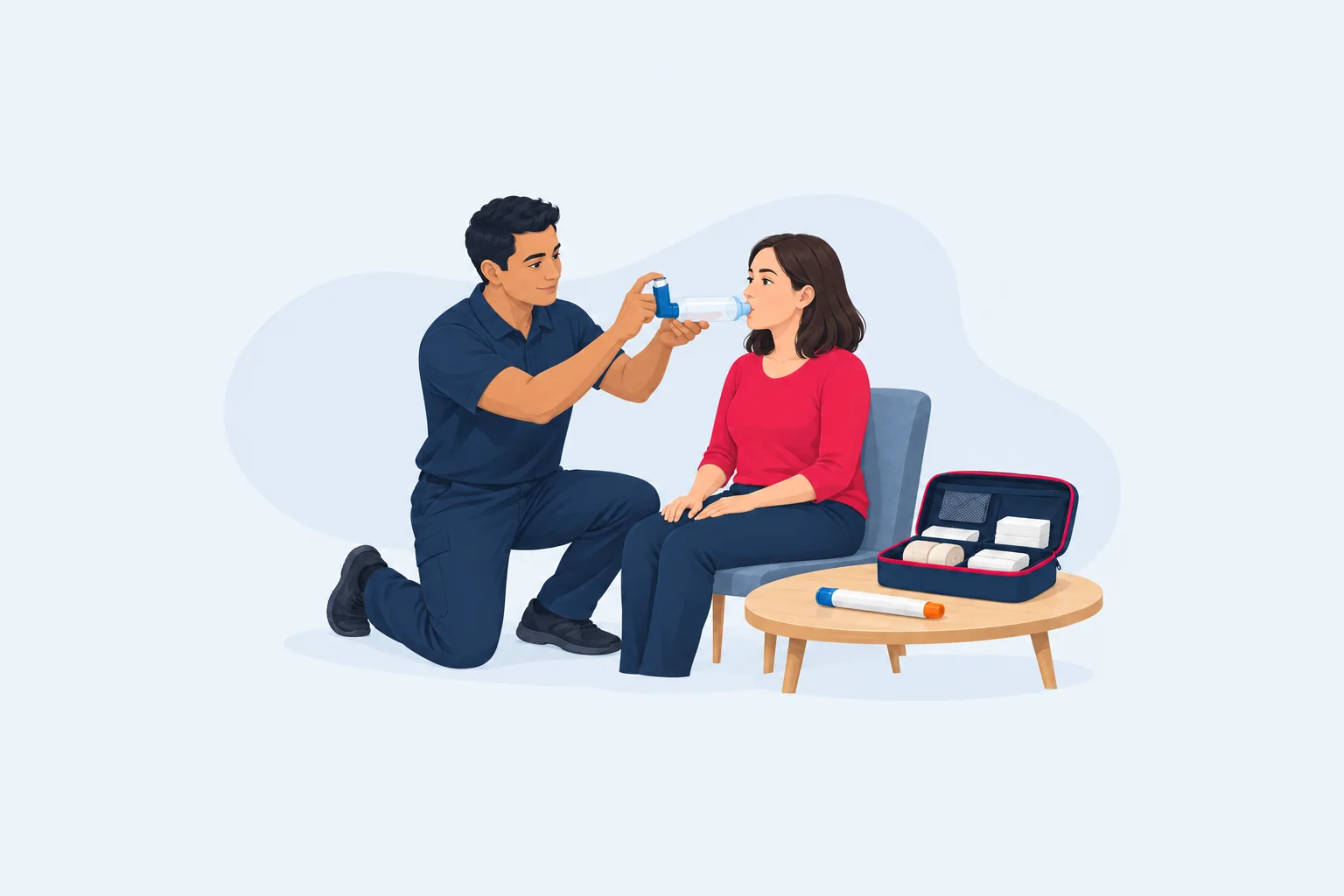
Anaphylaxis and asthma first aid is part of HLTAID011 Provide First Aid. For anaphylaxis, ASCIA's plan is to lay the person flat, give an adrenaline device and call Triple Zero (000); more adrenaline may be given if there's no response after 5 minutes. For asthma, the National Asthma Council's steps are to sit them upright, give 4 puffs of reliever through a spacer and wait 4 minutes.
What are the signs of anaphylaxis?
Anaphylaxis is the most severe type of allergic reaction, and ASCIA says it should always be treated as a medical emergency. Watch for any one of these signs:
- difficult or noisy breathing
- swelling of the tongue
- swelling or tightness in the throat
- wheeze or persistent cough
- difficulty talking or a hoarse voice
- persistent dizziness or collapse
- pale and floppy (in young children)
With an insect allergy, abdominal pain and vomiting are also signs of anaphylaxis.
Don't wait for skin signs. ASCIA's 2026 plans say anaphylaxis can occur without skin symptoms, and that milder signs, such as hives, a tingling mouth or swelling of the lips, face or eyes, may not appear first.
For a milder reaction, stay with the person, call for help, find an adrenaline device and phone their family or emergency contact. Then keep watching for the signs above.
What are the first aid steps for anaphylaxis?
ASCIA's First Aid Plan for Anaphylaxis lists six actions, in this order. A person's own ASCIA Action Plan has the same steps.
- Lay the person flat and don't let them stand or walk. If they're unconscious or pregnant, use the recovery position (on the left side if pregnant). If breathing is difficult, let them sit with their legs outstretched. Hold young children flat, not upright.
- Give an adrenaline device.
- Phone an ambulance on Triple Zero (000).
- Phone their family or emergency contact.
- Further adrenaline may be given if there's no response after 5 minutes.
- They need to go to hospital for at least 4 hours of observation.
Keep them lying or sitting even if they feel better. ASCIA says standing or walking can cause a drop in blood pressure, even when someone seems to have recovered. Stay with them until the ambulance arrives.
If you're not sure it's anaphylaxis, follow the plan's rule: if in doubt, give the adrenaline device. ASCIA says under-treating anaphylaxis is more harmful than over-treating a milder reaction. Antihistamines don't treat the severe breathing or cardiovascular symptoms of anaphylaxis, so they should never delay adrenaline.
If they become unresponsive and aren't breathing normally, start CPR.
How do you use an adrenaline autoinjector like an EpiPen?
You press it into the outer mid-thigh, through clothing if needed, and hold it there for 3 seconds. ASCIA's steps for an EpiPen are:
- Form a fist around the EpiPen and pull off the blue safety release.
- Hold the leg still and place the orange end against the outer mid-thigh, with or without clothing.
- Push down hard until a click is heard or felt, hold it in place for 3 seconds, then remove it.
With an Anapen, remove the black needle shield and then the grey safety cap, hold the needle end firmly against the outer mid-thigh at 90 degrees and press the red button. With a Jext, pull off the yellow cap and push the black tip firmly against the outer mid-thigh until it clicks. Hold either one in place for 3 seconds.
ASCIA's plans now say 'adrenaline device' rather than 'injector', and the 2026 versions also cover neffy, a needle-free nasal spray. Place its nozzle in a nostril until your fingers touch the nose, then press the plunger firmly. Don't test-spray it.
Each device is single-use. Give the used one to the paramedics and tell them when it was given.
What if someone with a known allergy has asthma symptoms?
Give adrenaline first, then the asthma reliever, and call 000. ASCIA's Action Plan for Anaphylaxis says to do this when someone with known asthma and an allergy to food, insects or medication suddenly has trouble breathing (wheeze, a persistent cough or a hoarse voice) and may have been exposed to their allergen. The National Asthma Council's chart gives the same order and says to follow it even if there are no other signs of an allergic reaction.
The two conditions can look alike. ANZCOR's asthma guideline notes that many fatal cases of food-induced anaphylaxis occur in people with asthma, and that the harm of not treating anaphylaxis outweighs the risk of giving adrenaline unnecessarily.
What are the 4 steps of asthma first aid?
The National Asthma Council's chart for ages 12 and over uses a blue/grey reliever puffer, such as Ventolin, Asmol or Zempreon, with a spacer. Use the person's own reliever if possible, or one from the first aid kit, or borrow one.
- Sit the person comfortably upright. Stay calm and reassure them.
- Give 4 puffs of reliever, one at a time. Shake the puffer and fit it into the spacer, fire 1 puff in, and have the person take 4 breaths in and out through the mouthpiece. Repeat until they've had 4 puffs.
- Wait 4 minutes. Stay with them, watch carefully and keep reassuring them. You can call 000 at any time.
- After 4 minutes, check which of these applies.
- Worse or no better, or a severe breathing problem: call 000 now. Keep giving 4 puffs every 4 minutes until the ambulance arrives.
- Improved but still hard to breathe: give 4 more puffs. If they still can't breathe normally within a few minutes, call 000 and keep giving 4 puffs every 4 minutes.
- Breathing normally and feeling better: get them to a doctor for a check-up.
If there's no spacer, the council suggests making one from a plastic drink bottle or rolled-up paper, and adults can use the puffer on its own. Its chart for children under 12 uses the same numbers, with a mask on the spacer for younger children. For combination inhalers such as Symbicort, see the council's asthma first aid page.
You may have learned a slightly different order. ANZCOR's asthma guideline, last reviewed in July 2023, says to give another 4 puffs if there's little or no improvement after 4 minutes, then call an ambulance if there's still no improvement. The council's chart brings that call forward for someone who is worse or no better. Both then say to keep giving 4 puffs every 4 minutes until the ambulance arrives.
When should you call 000 for asthma?
Call straight away if the attack is severe or not improving, or whenever you're unsure. The National Asthma Council's chart lists these reasons to call an ambulance:
- the person is drowsy
- they look blue around the lips
- they have a breathing problem and allergies to foods, insect stings or medicines
- the breathing problem is severe
- they're not getting better
- you're not sure what to do
Tell the call-taker that someone is having an asthma attack. If you're not sure it's asthma but the person is conscious and their main problem seems to be breathing, give the blue/grey reliever and call 000. The council says the reliever is unlikely to harm them even if they don't have asthma. If they're unconscious, start life support using the DRSABCD action plan.
Does HLTAID011 cover anaphylaxis and asthma first aid?
Yes. The assessment requirements for HLTAID011 Provide First Aid say you must show you can manage casualties with anaphylaxis and with asthma. Assessment must give you access to an adrenaline autoinjector training device and a placebo reliever with a spacer, so you practise the technique without real medication.
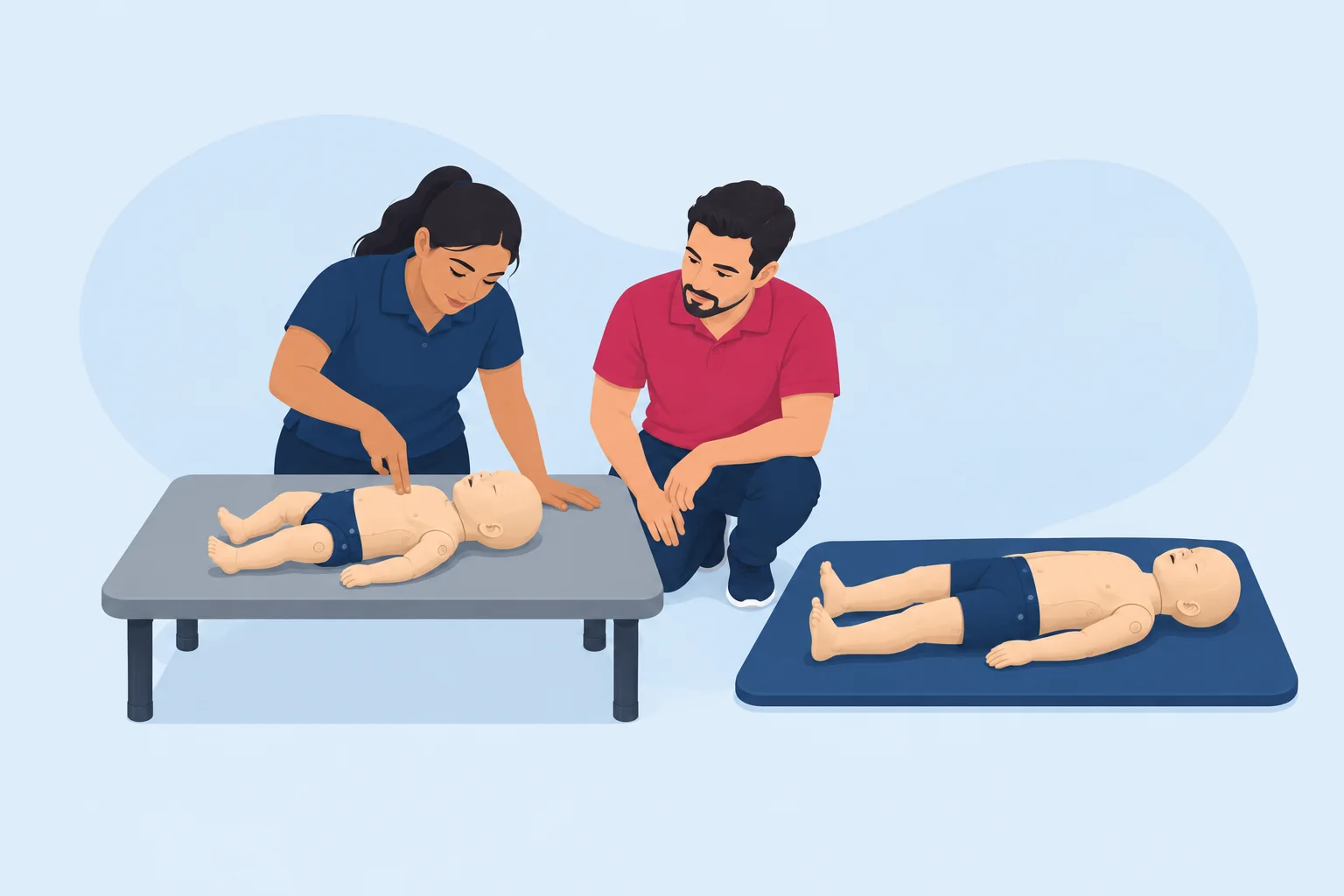
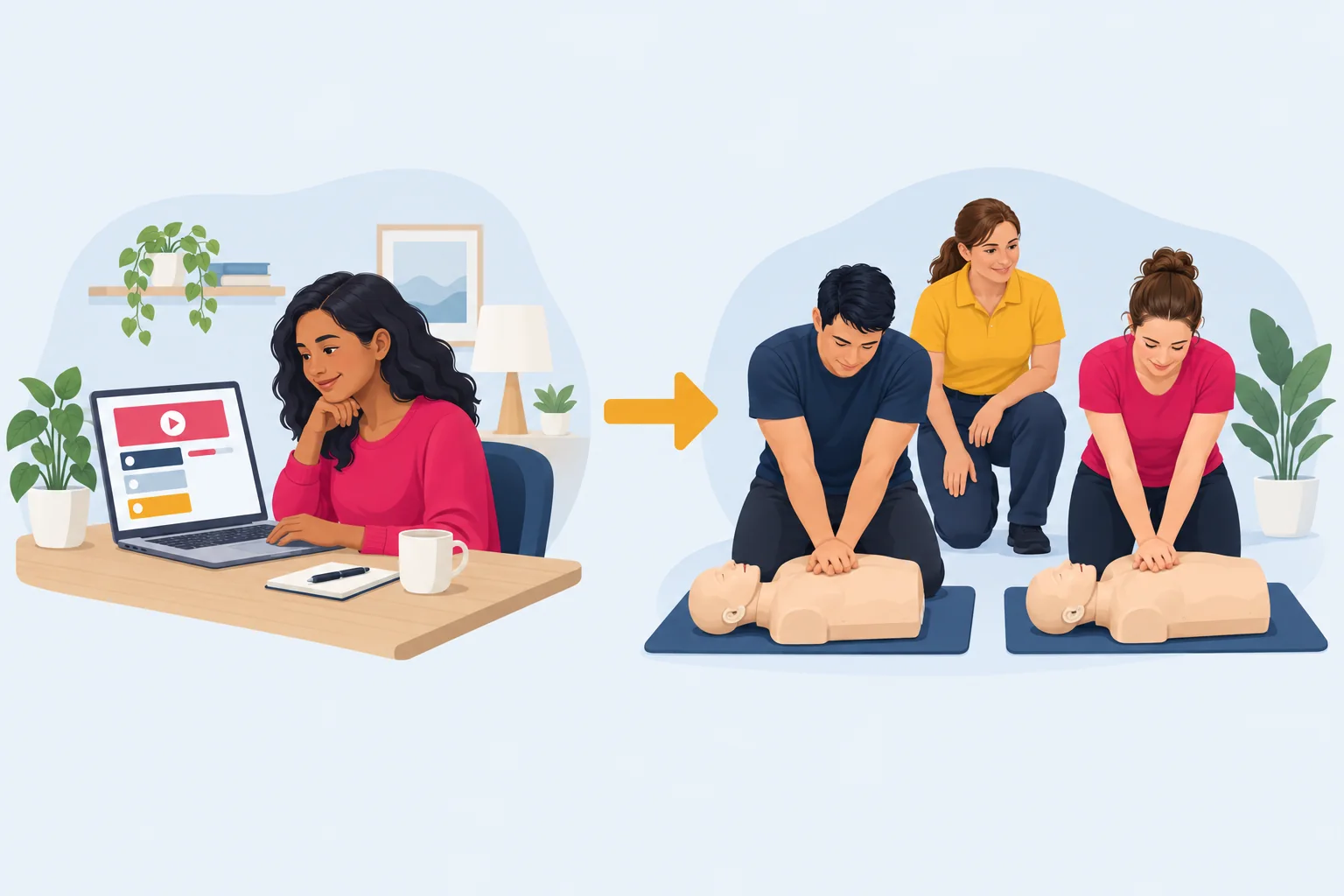
In our HLTAID011 Provide First Aid course, you do the theory online, then attend one practical session of about 3 hours. You use autoinjector trainers and spacers, and work through scenarios such as a severe allergic reaction or an asthma attack. HLTAID009 Provide CPR on its own doesn't cover either condition, as it's CPR and defibrillation only.
If you or your team need these skills, HLTAID011 is the one to book. Across metropolitan Melbourne, we can also run it as on-site group training at your workplace.
This article is general information, not a substitute for first aid training or medical advice. In an emergency, call Triple Zero (000).
Sources
- ASCIA Action Plans and First Aid Plan for Anaphylaxis – Australasian Society of Clinical Immunology and Allergy (ASCIA)
- ASCIA Action Plan for Anaphylaxis Updates 2026 – ASCIA
- How to give adrenaline (epinephrine) devices – ASCIA
- First aid for asthma ages 12+ chart – National Asthma Council Australia
- Guideline 9.2.5 – First Aid for Asthma – ANZCOR
- Assessment Requirements for HLTAID011 Provide First Aid – training.gov.au

.svg)


