


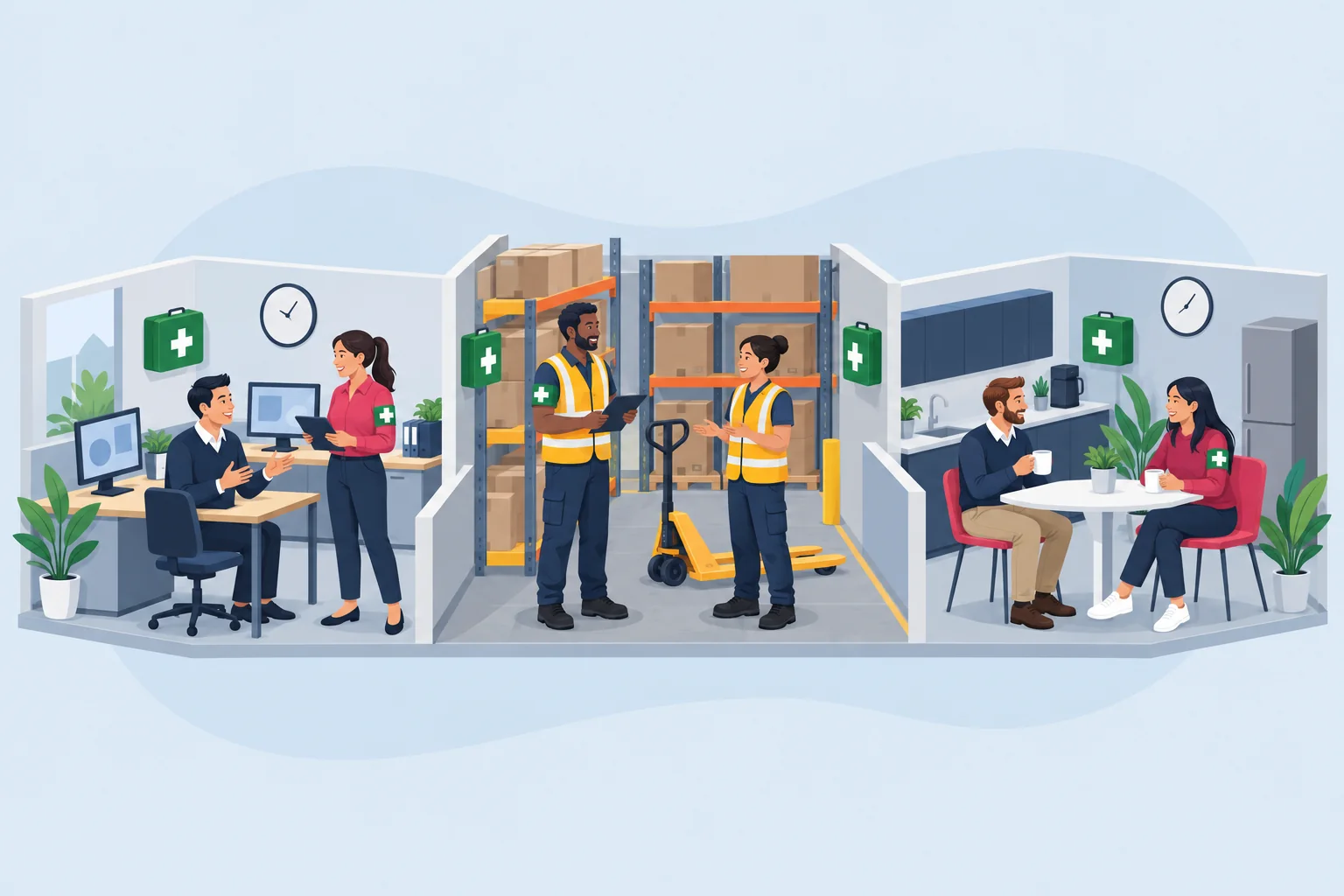
The number depends on your state or territory, how risky the work is and how many people work at the same time. Safe Work Australia's model code recommends one first aider for every 50 workers in a low-risk workplace, one for every 25 in a high-risk workplace and one for every 10 in a remote high-risk workplace. WorkSafe Victoria's code sets its own numbers.
How many first aiders does the model Code of Practice recommend?
Safe Work Australia's model Code of Practice First aid in the workplace (July 2019 edition) gives three ratios:
- Low-risk workplaces such as offices, shops and libraries: one first aider for every 50 workers.
- High-risk workplaces, where people use hazardous machinery or chemicals, risk serious falls, face violence or work in extreme heat or cold: one for every 25 workers.
- Remote high-risk workplaces, which are high risk and lack timely access to medical and ambulance services: one for every 10 workers.
Count the most workers you'll have on site at one time, including contractors, subcontractors and volunteers. The WHS Regulations require an adequate number of first aiders without naming a figure, and the code shows what adequate looks like.
Outside Victoria, every state and territory runs the model WHS laws, but a model code only has legal effect once your state or territory approves it, so check your regulator's version.
How many first aid officers does a Victorian workplace need?
Under WorkSafe Victoria's compliance code, a low-risk workplace with 10 to 50 employees needs one first aid officer, and a higher-risk workplace needs one for up to 25 employees. Those are the prescribed numbers. The alternative is a documented risk assessment.
Victoria has its own law, the Occupational Health and Safety Act 2004, under which employers must provide adequate welfare facilities. WorkSafe says that includes first aid kits and trained first aid officers. Its compliance code First aid in the workplace (November 2021) isn't mandatory, but following it means you're taken to have met that duty. The full prescribed numbers are:
- Low-risk workplaces such as offices, libraries and most retail shops: no first aid officer below 10 employees, just a basic first aid kit. Then one officer for 10 to 50 employees, two for 51 to 100 and one more for every additional 100.
- Higher-risk workplaces such as manufacturing plants, commercial kitchens, vehicle workshops and forestry operations: one officer for up to 25 employees, two for 26 to 50 and one more for every additional 50.
A workplace where medical or ambulance help isn't readily available counts as higher risk, and a site that mixes an office with a workshop uses the higher-risk numbers. The two codes don't always agree: a 100-person office needs two first aiders under either, but a higher-risk site with 100 workers needs four under the model code and three in Victoria.
WorkSafe says large workplaces and those with complex hazards should use the risk assessment approach. It won't judge you against the table if you do, so keep your assessment on file. If you use the prescribed approach, follow all of it, kits and procedures included.
How do shifts, leave and rosters change the number?
Work the number out for each shift, then add cover for leave and days off. Both codes say first aid cover needs to be available whenever people work, including night shifts and overtime.
Safe Work Australia's worked example is an office and factory with 80 workers per shift across three shifts. It needs nine first aiders, with one in the office and two in the factory on every shift. WorkSafe Victoria's sample assessment reaches the same number.
A first aider on leave, off sick or on a rostered day off doesn't count that day. WorkSafe asks employers to allow for rosters, leave, flexible work and staff turnover, and the model code lists absences and seasonal peaks as reasons to train more people. Check that your leanest day still has a trained person on every shift.
What about multiple sites, floors and remote workers?
Plan each site separately. A large site may need first aid in more than one place if workers are spread out, parts are hard to reach, emergency services are far away or there's more than one floor.
In a shared building, the model code lets you arrange access to another business's first aiders instead of training your own, if you agree the arrangement and your workers can reach one whenever they work. Put first aiders' names, locations and phone numbers on your first aid signs.
Remote, mobile and lone workers need a plan rather than a ratio. Where a first aider can't practicably be with them, the model code says they need a reliable way to reach emergency services or a first aider, and training in what to do if someone is seriously hurt. That means a way to call Triple Zero (000) that works where they are, such as a satellite phone where there's no mobile coverage, and a first aid kit in the vehicle.
Higher-risk and remote sites may need more than standard first aid training. The codes list cases for extra or advanced training, including remote work, hazardous substances such as cyanide, an on-site first aid room and staff with known medical conditions. Victoria's 2021 code dropped the old separate ratio for remote higher-risk sites and focuses on training and kit contents instead.
What training do first aiders need, and how often?
The minimum is the same in both codes: a nationally recognised Statement of Attainment for Provide First Aid, currently HLTAID011, from a registered training organisation, or a course with equivalent skills. Both say CPR should be refreshed every year and first aid renewed every three years.
The Statement of Attainment doesn't expire. Those cycles are recommendations, but employers and industries often make them requirements. ANZCOR's guideline on CPR training notes that skills fade within weeks to months of a course.
Keep a register of certificate dates and book refreshers before they fall due, so a delayed session doesn't leave a shift uncovered. The annual CPR update is HLTAID009 Provide CPR. If your team trains with us, anyone who opts in to renewal reminders will hear from us before their renewal is due.
How do you get your team trained?
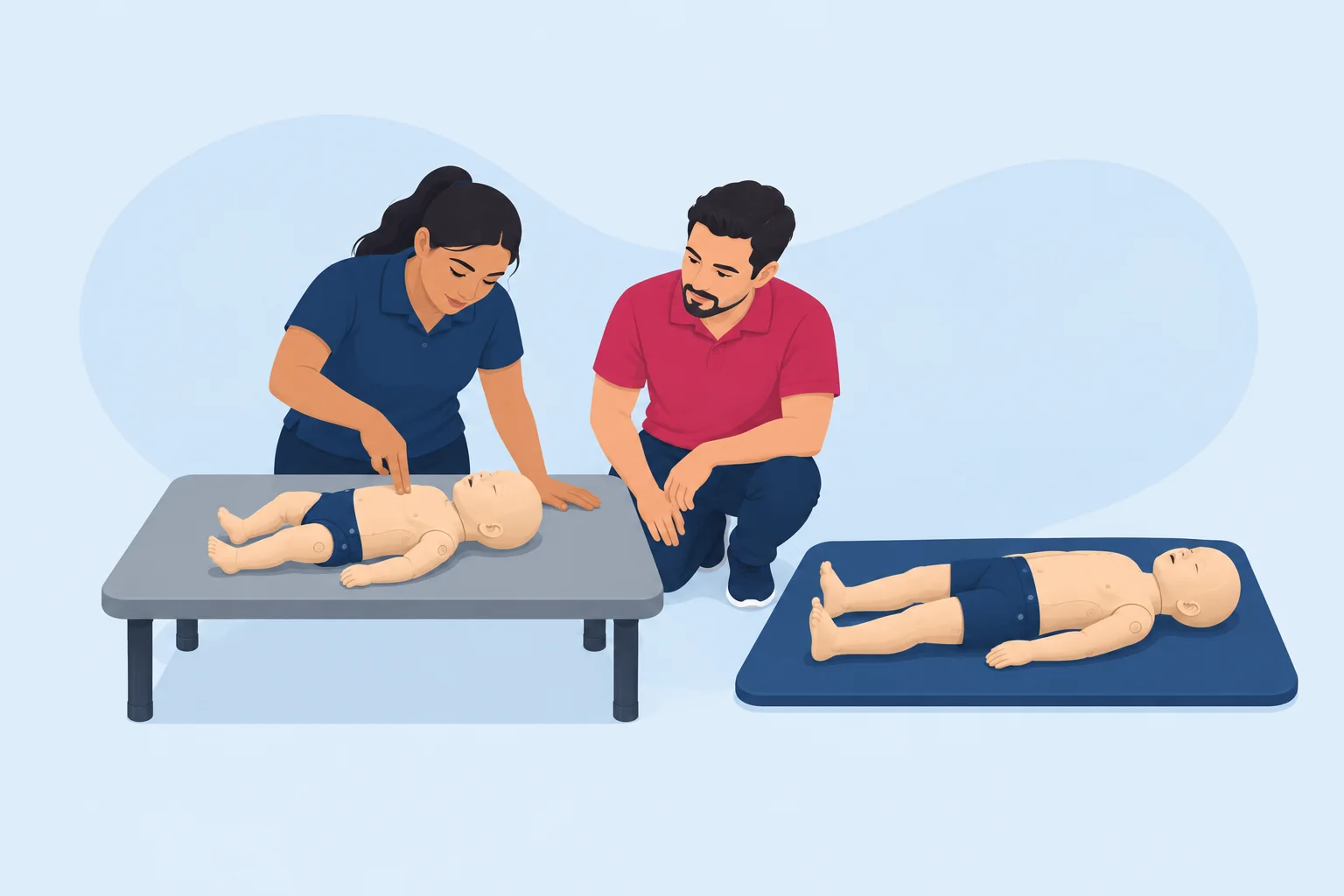
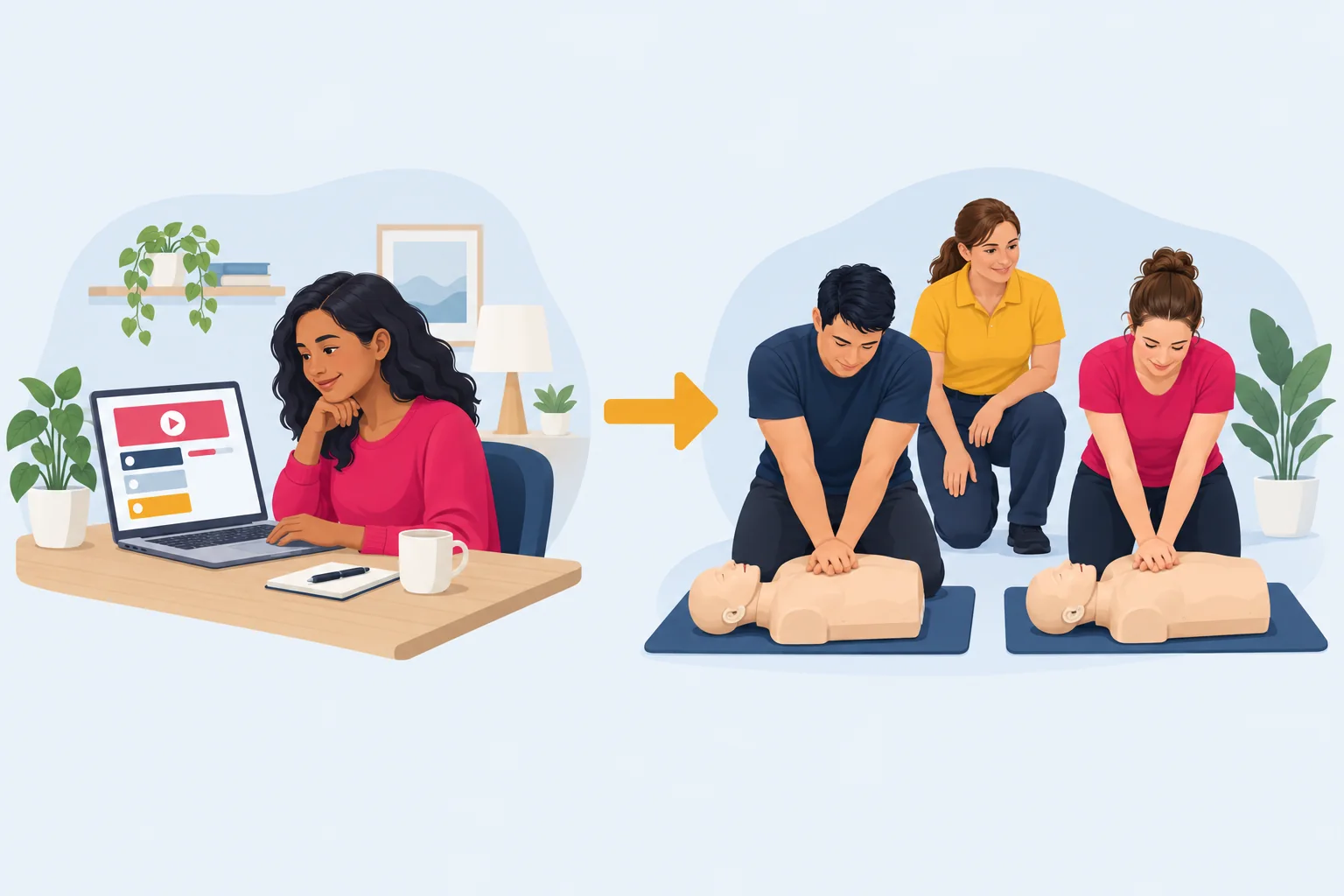
Train the number you've worked out, plus cover for leave, in HLTAID011 Provide First Aid, the unit both codes point to. It's online theory, then one practical session of about three hours, with the Statement of Attainment usually emailed within one business day.
For groups, we run on-site training anywhere in metropolitan Melbourne. We bring the manikins, AED trainers and assessment materials, and can schedule evenings and weekends to suit shift workers. Our post on how we run on-site group training explains the day.
Every group quote includes a free first aid risk assessment. Send your headcount per shift, sites and rosters through the workplace group training enquiry, and we'll reply with availability and a quote.
Sources
- Model Code of Practice: First aid in the workplace (July 2019) – Safe Work Australia
- Compliance code: First aid in the workplace (November 2021) – WorkSafe Victoria
- Compliance code: First aid in the workplace – key changes – WorkSafe Victoria
- Guideline 10.1 – Basic Life Support (BLS) Training – ANZCOR
- HLTAID011 Provide First Aid – training.gov.au

.svg)


